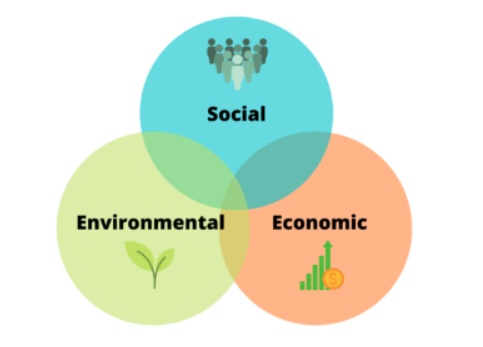
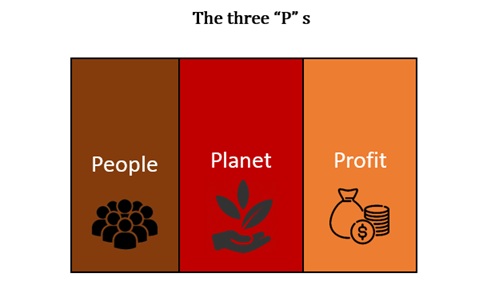
In today’s changing business landscape, success is no longer measured by financial gain alone. Modern organizations are increasingly adopting a broader perspective, one that balances economic growth with environmental stewardship and social responsibility. This approach is known as the Triple Bottom Line (TBL), a sustainability framework introduced by John Elkington in 1994. The Triple Bottom Line emphasizes three core pillars commonly referred to as the Three Ps: Profit, Planet, and People. Together, they redefine how businesses measure performance and long-term value.
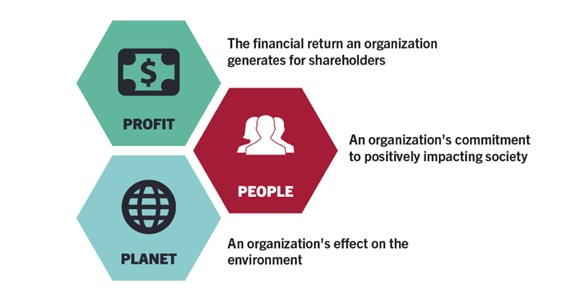
Traditionally, business success has been defined by profitability. In a capitalist economy, companies are expected to deliver strong financial returns to shareholders. Strategic planning, cost control, operational efficiency, and risk management are all designed to maximize revenue and safeguard margins. Moreover, the leaders now recognize that financial success and sustainability are not mutually exclusive. In fact, integrating sustainable practices often strengthens financial performance.
Companies that:
❖ Reduce energy and resource consumption
❖ Improve operational efficiency
❖ Minimize waste
❖ Enhance brand reputation
often experience cost savings, increased customer loyalty, and improved investor confidence.
Today, profit is not just about short-term gains; it’s about creating long-term economic resilience while contributing positively to society. Since the Industrial Revolution, large-scale industrial activities have significantly contributed to environmental degradation, pollution, and climate change. Businesses, historically among the largest contributors to carbon emissions, now hold tremendous potential to reverse this trend. Environmental sustainability focuses on ensuring that human activities remain within the Earth’s capacity to sustain life. This means organizations must evaluate both: Raw materials, energy consumption, water usage, & Greenhouse Gas emissions, waste, and pollutants
Responsible businesses are taking measurable steps such as:
❖ Transitioning to renewable energy
❖ Using ethically and responsibly sourced materials
❖ Reducing carbon footprints
❖ Streamlining logistics to cut transportation emissions
❖ Aligning with global frameworks like the UN Sustainable Development Goals (SDGs)
The third pillar is the social dimension of sustainability. Businesses do not operate in isolation; they affect employees, customers, suppliers, and communities. Organizations that prioritize their workforce and communities often see enhanced employee engagement, stronger stakeholder trust, and improved brand loyalty. Social responsibility is no longer optional; it is a fundamental component of long-term business success. In a world facing climate change, resource scarcity, and social inequality, companies that embed sustainability into their strategy are better positioned to thrive. Rather than viewing sustainability as a compliance burden, organizations are increasingly recognizing it as a driver of innovation, resilience, and competitive advantage.
The Triple Bottom Line is not about sacrificing profit; it is about redefining it. At EHS Management Consultants, we believe sustainability is not just about reporting, it is about embedding responsible practices into the DNA of an organization.